Direct Coral Attachment
A suspended rope nursery systemthat improves water circulation,reduces sediment accumulation,and supports healthy coral growth.
How Direct Coral Attachment Works
How It Works
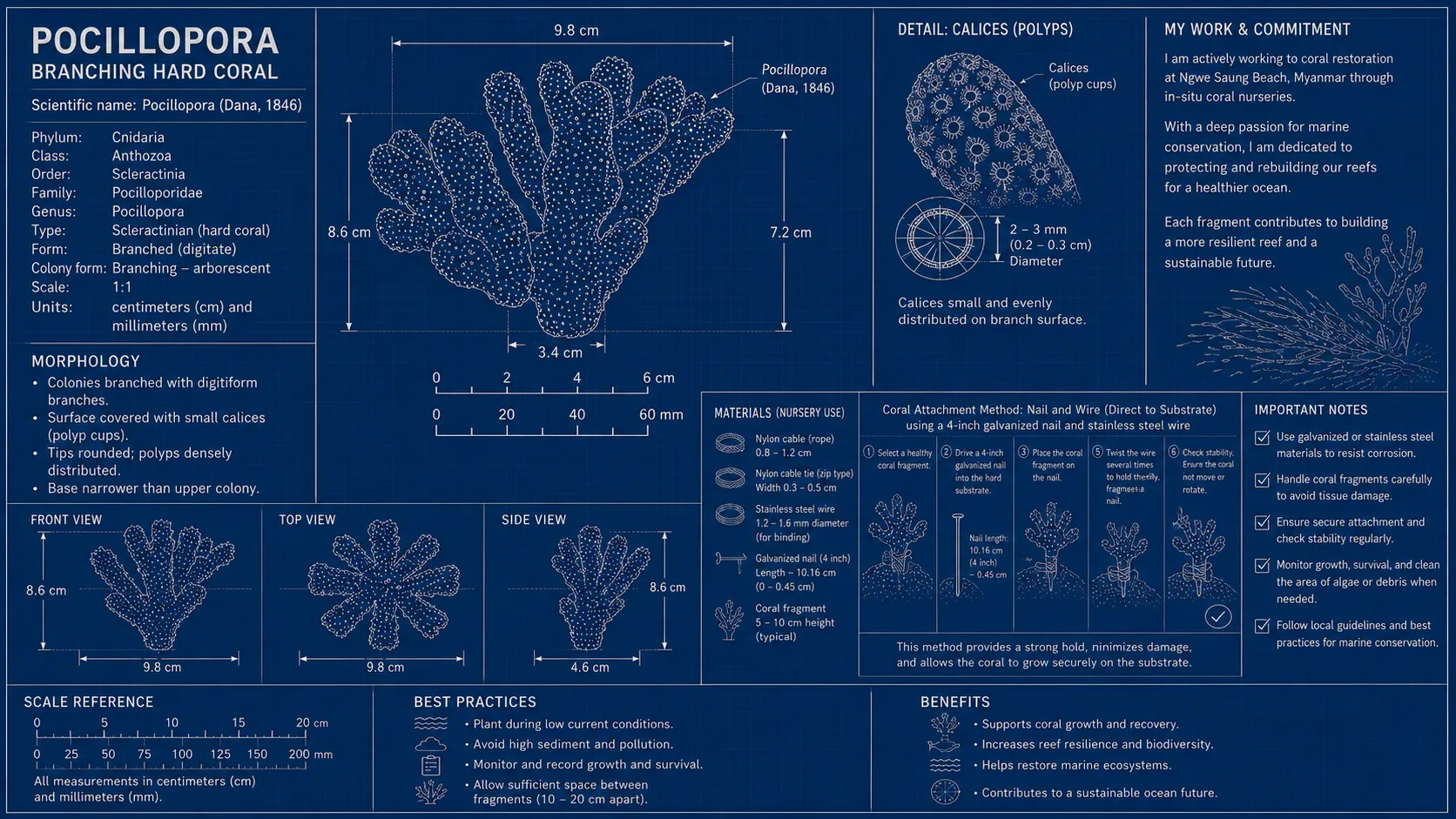
Direct Coral Attachment is a restoration technique in which healthy coral fragments are securely attached directly onto stable natural rock or dead coral substrate. Once attached, the fragments gradually grow, fuse with the substrate, and contribute to the natural recovery of the reef
Select a Suitable Site
Choose a stable reef area with firm natural rock or dead coral substrate. The site should have good water circulation, adequate sunlight, and low sediment movement to provide suitable conditions for coral survival and long-term growth.
Prepare the Substrate
Before attachment, remove algae, loose sediment, and unstable material from the selected surface. A clean and solid substrate improves attachment strength and helps coral fragments establish more successfully.
Attach Coral Fragments
Healthy coral fragments are securely attached directly to the reef using a galvanized or stainless steel nail and stainless steel wire. This method provides a strong attachment while minimizing damage to the coral and allowing natural growth over time.
Coral Healing and Growth
After attachment, coral tissue gradually grows over the attachment point and begins to fuse with the natural substrate. As the colony develops, new skeletal growth permanently secures the coral and contributes to reef recovery.
Direct Coral Attachment Specifications
The following specifications summarize the recommended environmental conditions, attachment methods, and monitoring practices used for Direct Coral Attachment in reef restoration.
Suitable Water Depth
Recommended Depth
3–10 meters
Depending on water clarity, wave exposure, and local reef conditions.
Substrate Type
Recommended Substrate
Stable natural rock or dead coral
The attachment surface should be firm, clean, and free from loose sediment.
Attachment Method
Direct Coral Attachment
Galvanized or stainless steel nail with stainless steel wire
Provides a secure attachment while minimizing coral damage.
Recommended Coral Species
Suitable Species
Pocillopora spp.
Fast-growing branching hard corals commonly used for restoration.
Recommended Fragment Size
Coral Fragment
5–10 cm
Healthy fragments with active growth tips provide higher survival rates.
Monitoring
Routine Monitoring
-Coral survival
-Growth rate
-Algae removal
-Attachment stability
-Structural inspection
Environmental Conditions
Ideal Conditions
-Good water circulation
-Low sedimentation
-Stable reef substrate
-Moderate sunlight
-Minimal pollution
Restoration Objective
Primary Goal
Restore degraded reefs by promoting long-term coral survival, natural growth, and ecosystem recovery.
Benefits of Direct Coral Attachment
Direct Coral Attachment is a practical and sustainable restoration method that encourages natural reef recovery by securely attaching healthy coral fragments directly onto stable reef substrates.
Natural Reef Recovery
Coral fragments grow directly on natural reef surfaces, allowing the restored colony to become a permanent part of the ecosystem.
Strong and Secure Attachment
Using stainless steel wire and marine-grade nails provides a stable attachment that withstands waves and water movement while minimizing coral damage.
Low Visual Impact
Unlike artificial nursery structures, this method preserves the natural appearance of the reef after the coral becomes established.
Long-Term Coral Survival
Stable attachment and suitable environmental conditions improve coral survival and support continuous colony growth.
Cost-Effective Restoration
The technique requires only simple, durable materials, making it an affordable solution for community-based reef restoration projects.
Supports Marine Biodiversity
As coral colonies grow, they create habitat for reef fish, crustaceans, and other marine organisms, helping restore overall reef biodiversity.
Suitable for Community Projects
The method is easy to learn and can be applied by trained volunteers, students, dive professionals, and local communities.
Sustainable Conservation
Direct Coral Attachment contributes to long-term reef resilience and supports healthier marine ecosystems for future generations.