Restoring Myanmar'sCoral Reefs
Marine Conservation Myanmar operates a community-led coral rope nursery and reef restoration programme on the pristine coastline of Ngwe Saung Beach — where healthy reefs mean thriving fisheries, sustainable tourism, and a resilient coastal future.
Who We Are
A First-of-Its-Kind Reef Restoration Initiative
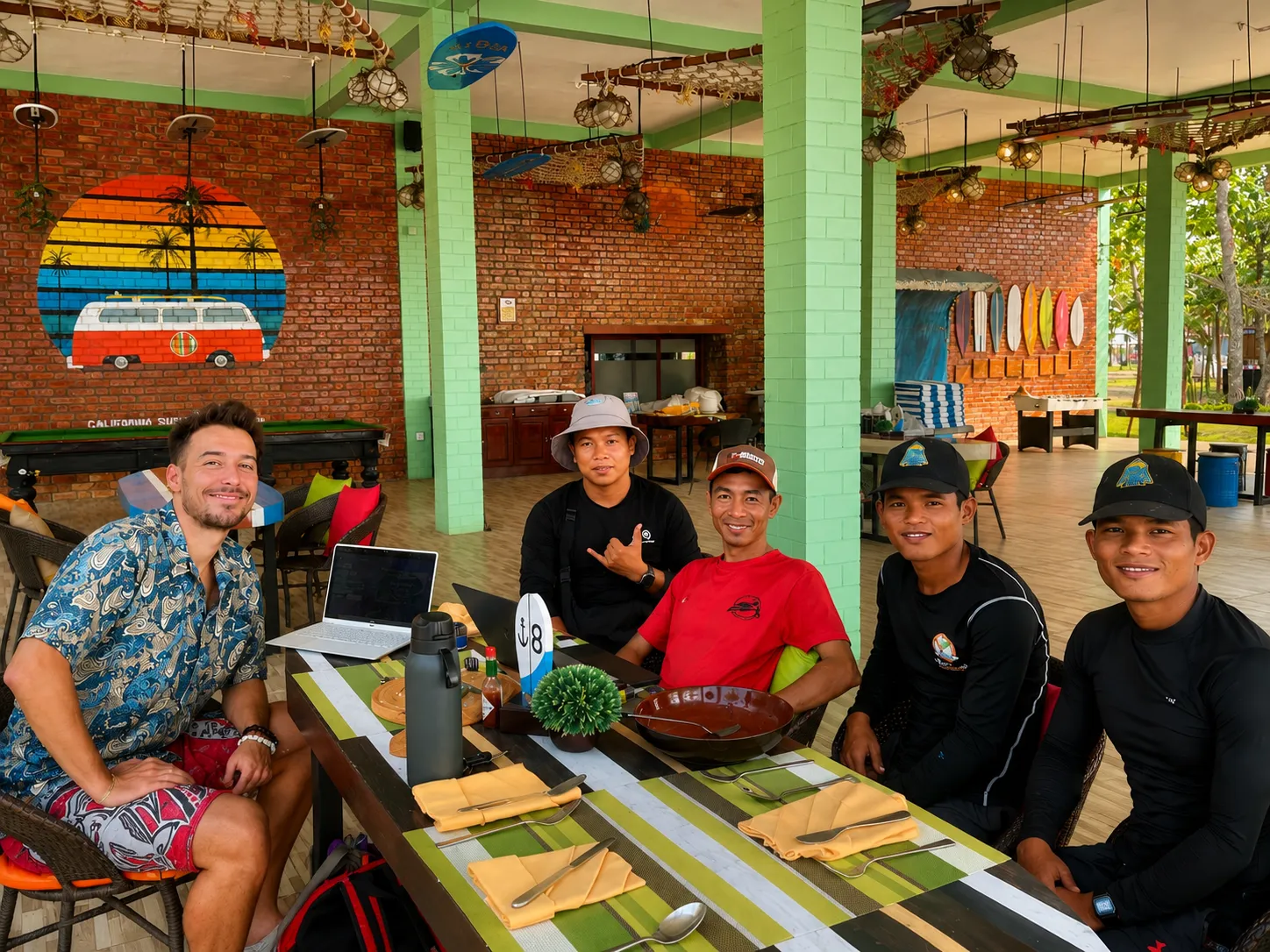
Founded by Nyan Linn Aung (Georgie Aung) and Igor Stanisic, Marine Conservation Myanmar is the first organisation to bring structured coral restoration and scientific reef monitoring to Ngwe Saung Beach.
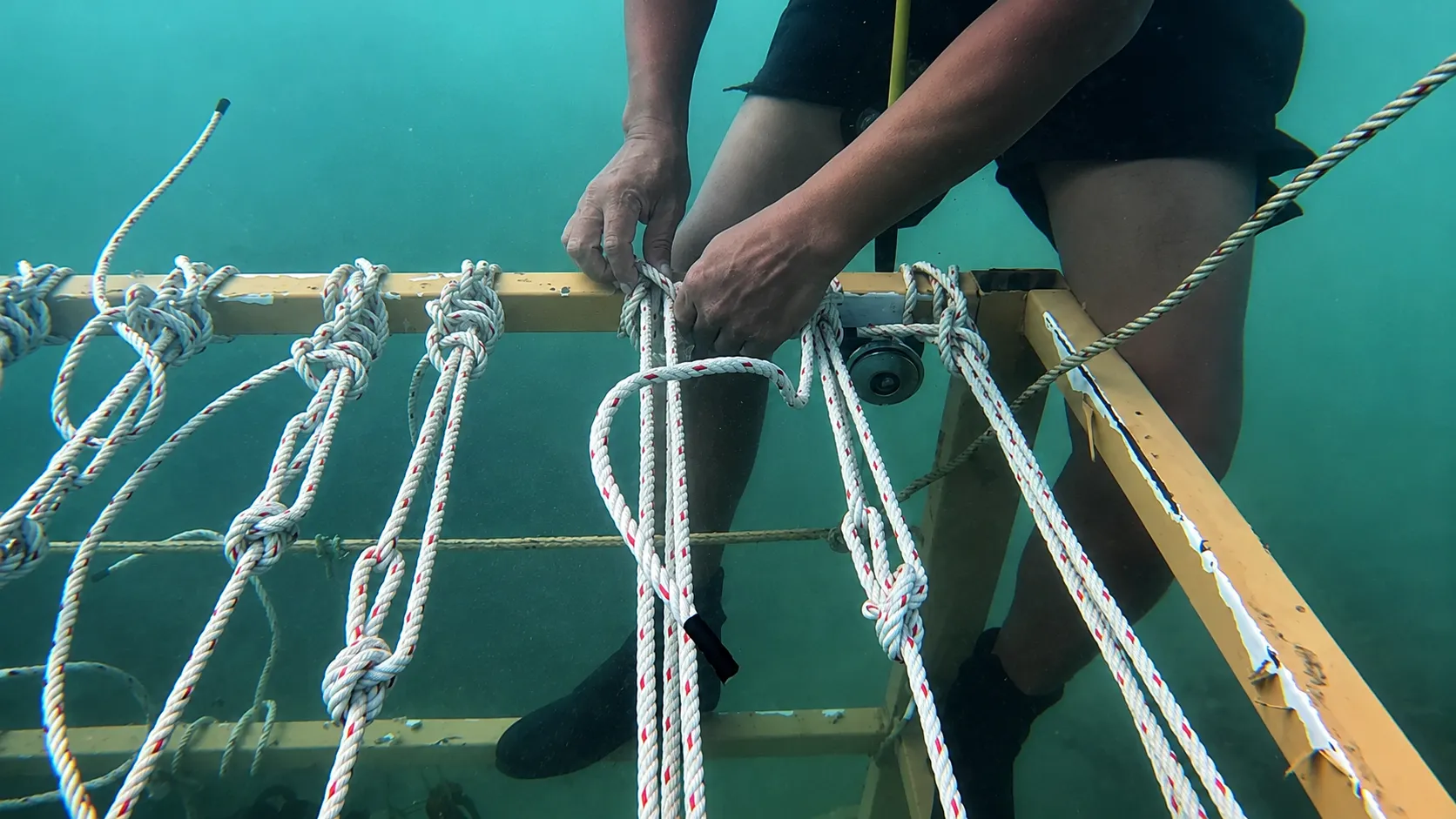
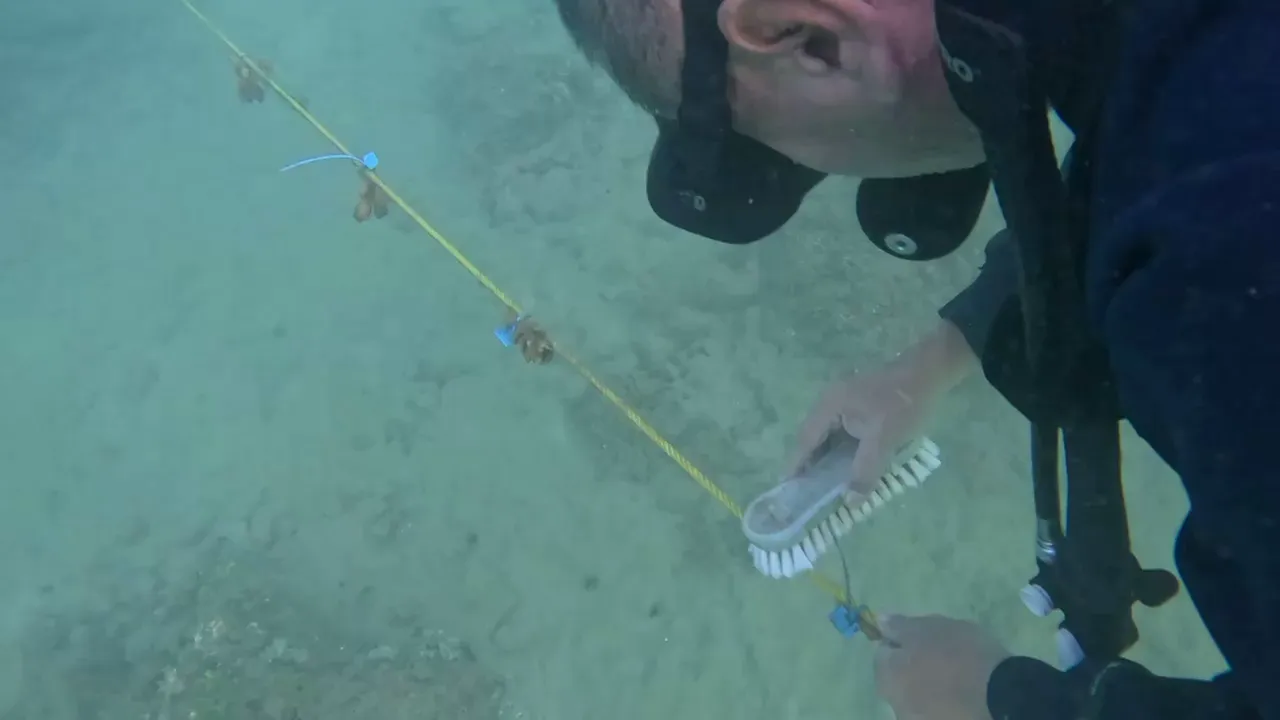
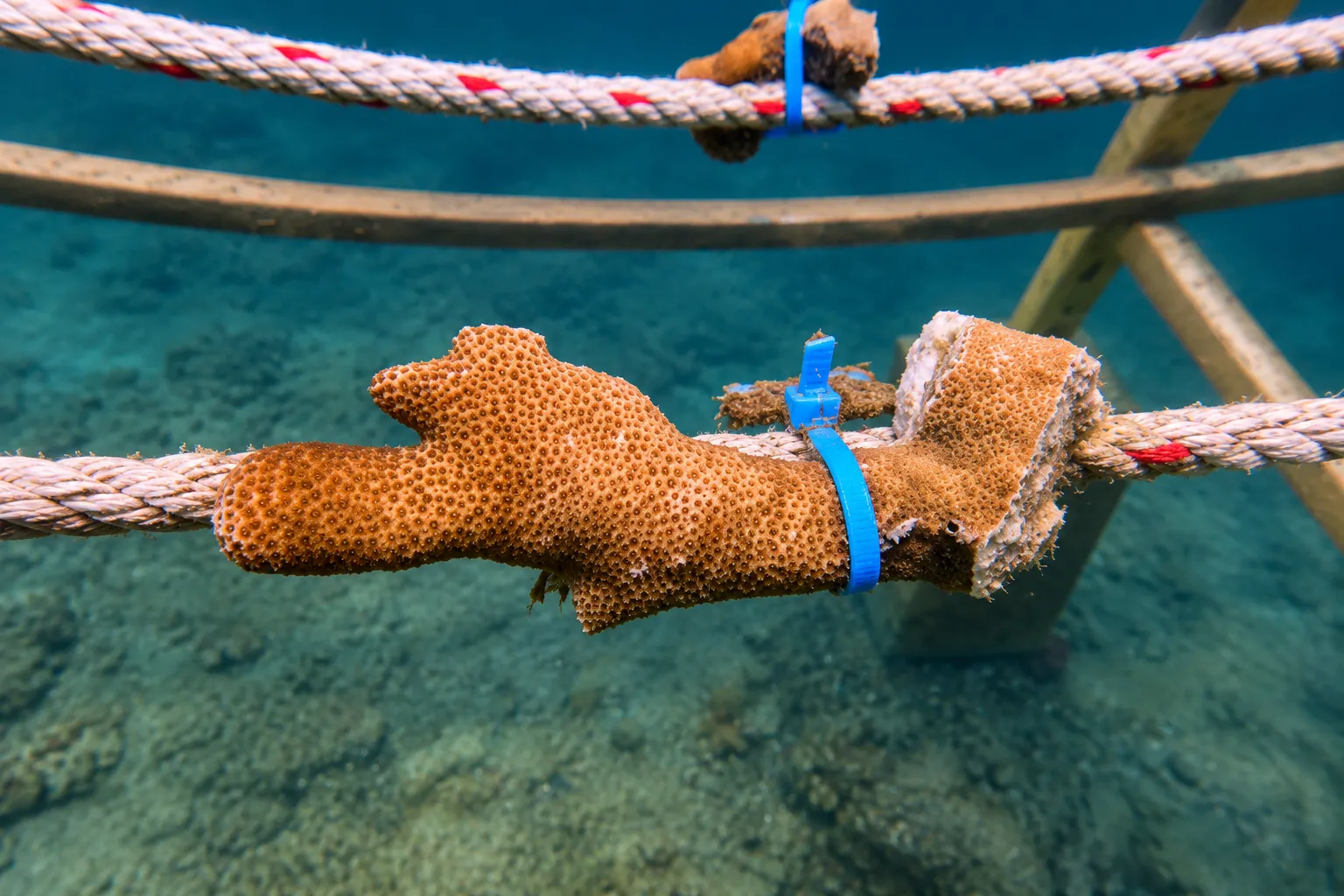
Our rope nursery method — proven across the Indo-Pacific — is perfectly suited to Ngwe Saung's sandy-bottom environment, where traditional fixed structures cannot operate. We grow coral fragments at mid-water depth, protect them from sediment and algae, then transplant them onto degraded reef sections.
Meet the Team →The Urgency
Ngwe Saung's reefs face rising sea temperatures, anchor damage, overfishing, and coastal runoff. Currently, no formal restoration programme exists. Every year without action means irreversible loss.
- Coral bleaching events intensifying
- No baseline reef data collected to date
- Fish habitat degrading, reducing local catches
- Eco-tourism potential at risk
What We Do
Six Pillars of Reef Restoration
Our programme is built on six interconnected objectives that address both the ecological and social dimensions of reef conservation.
Reef Survey & Baseline
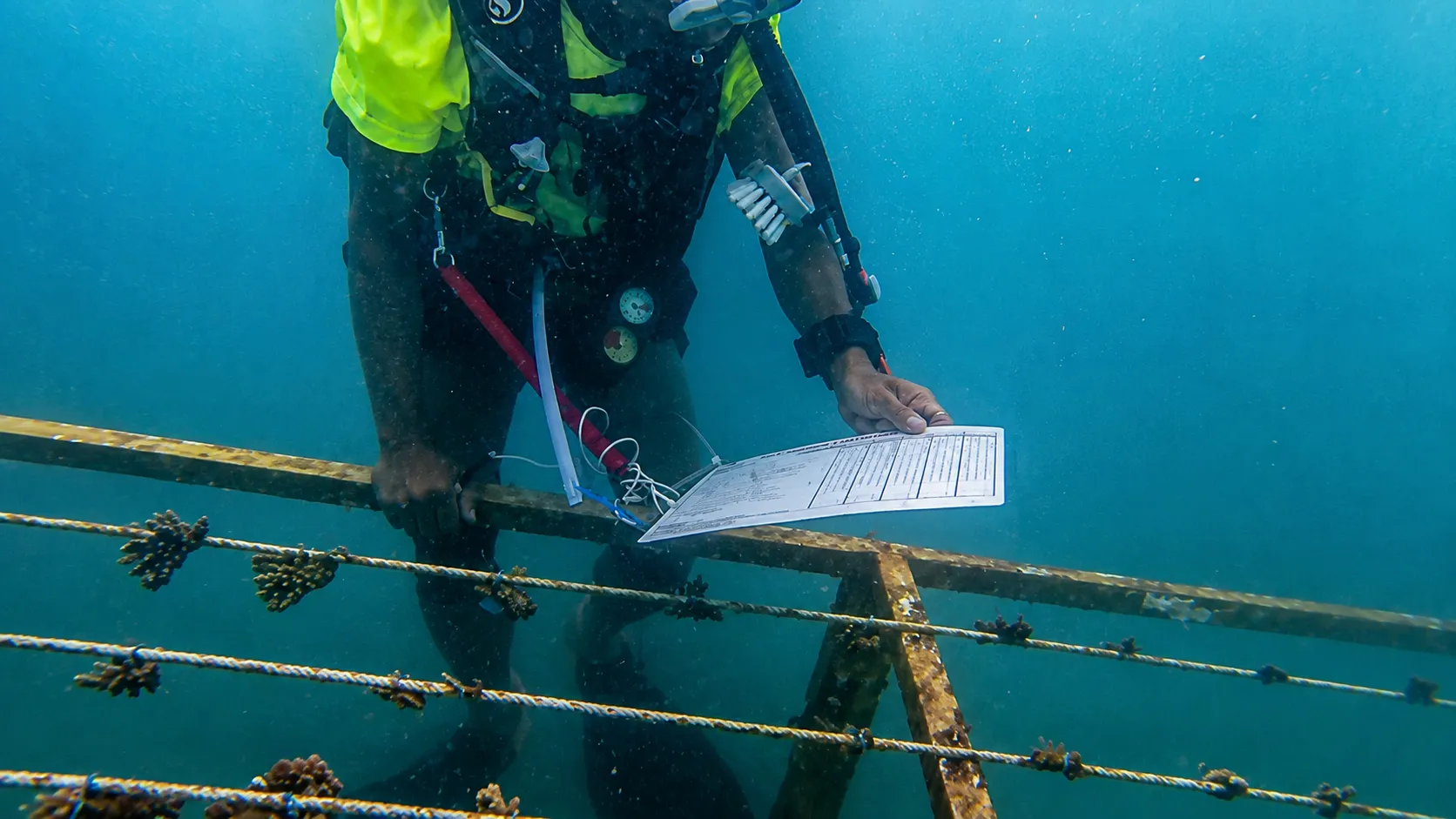
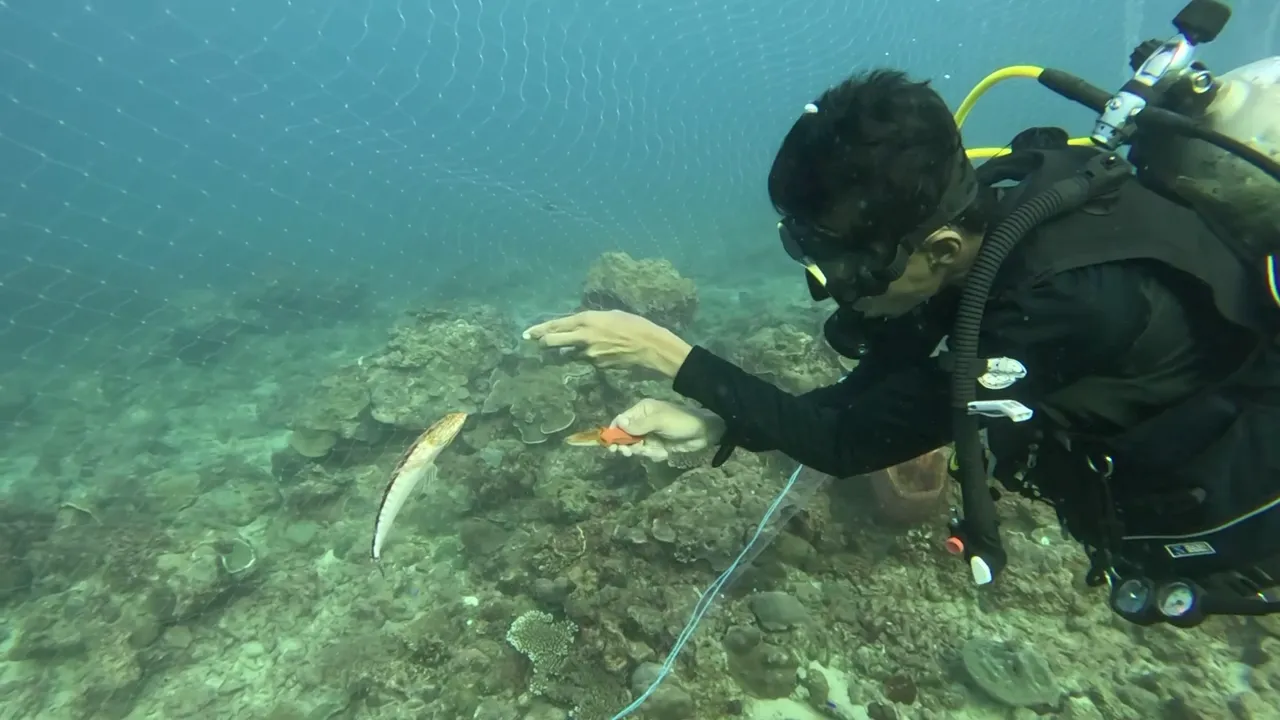
Trained divers conduct belt transects and photo-quadrat surveys to map reef health, document coral species, and create a scientific baseline for measuring recovery.
Rope Nursery
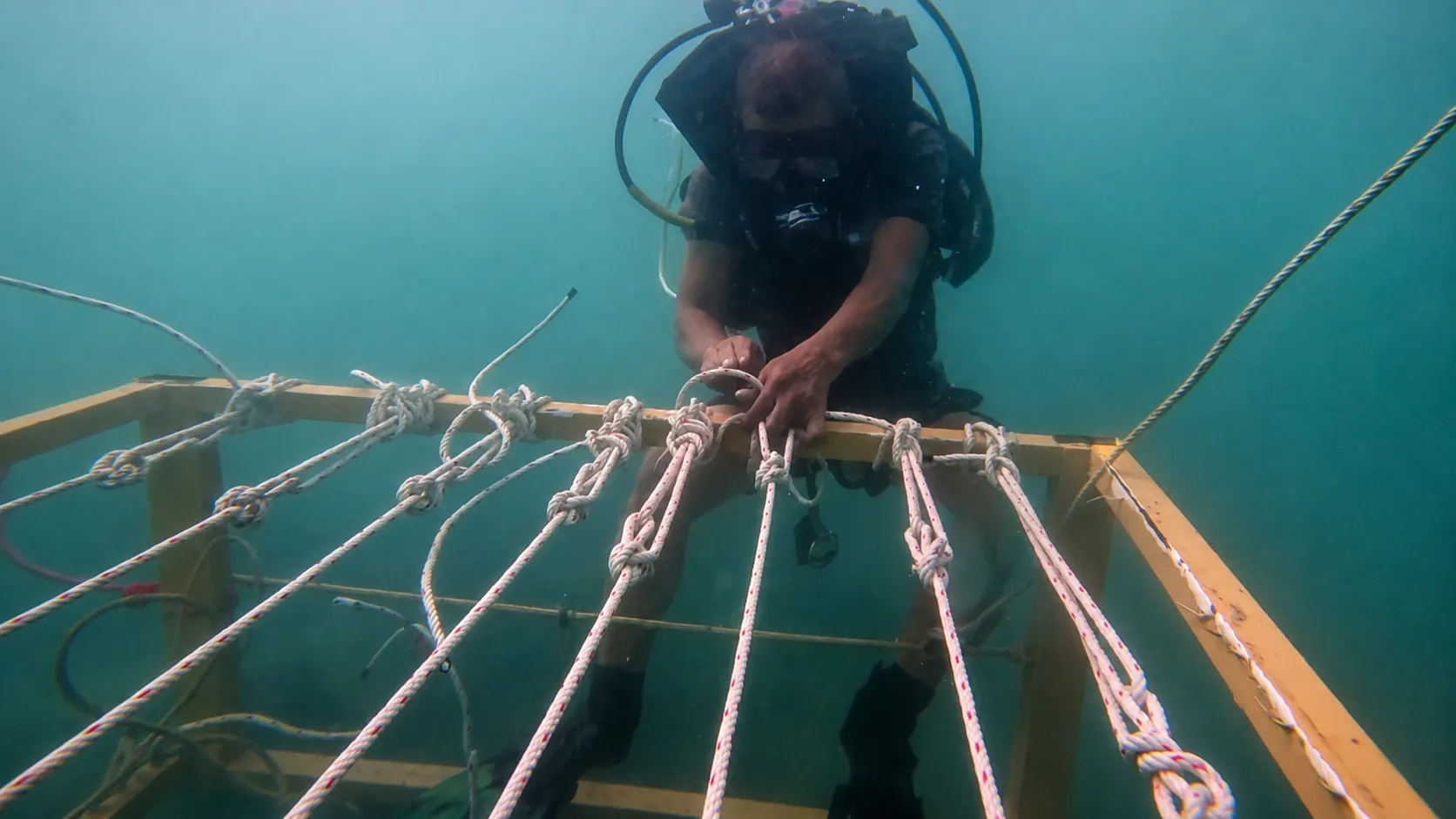
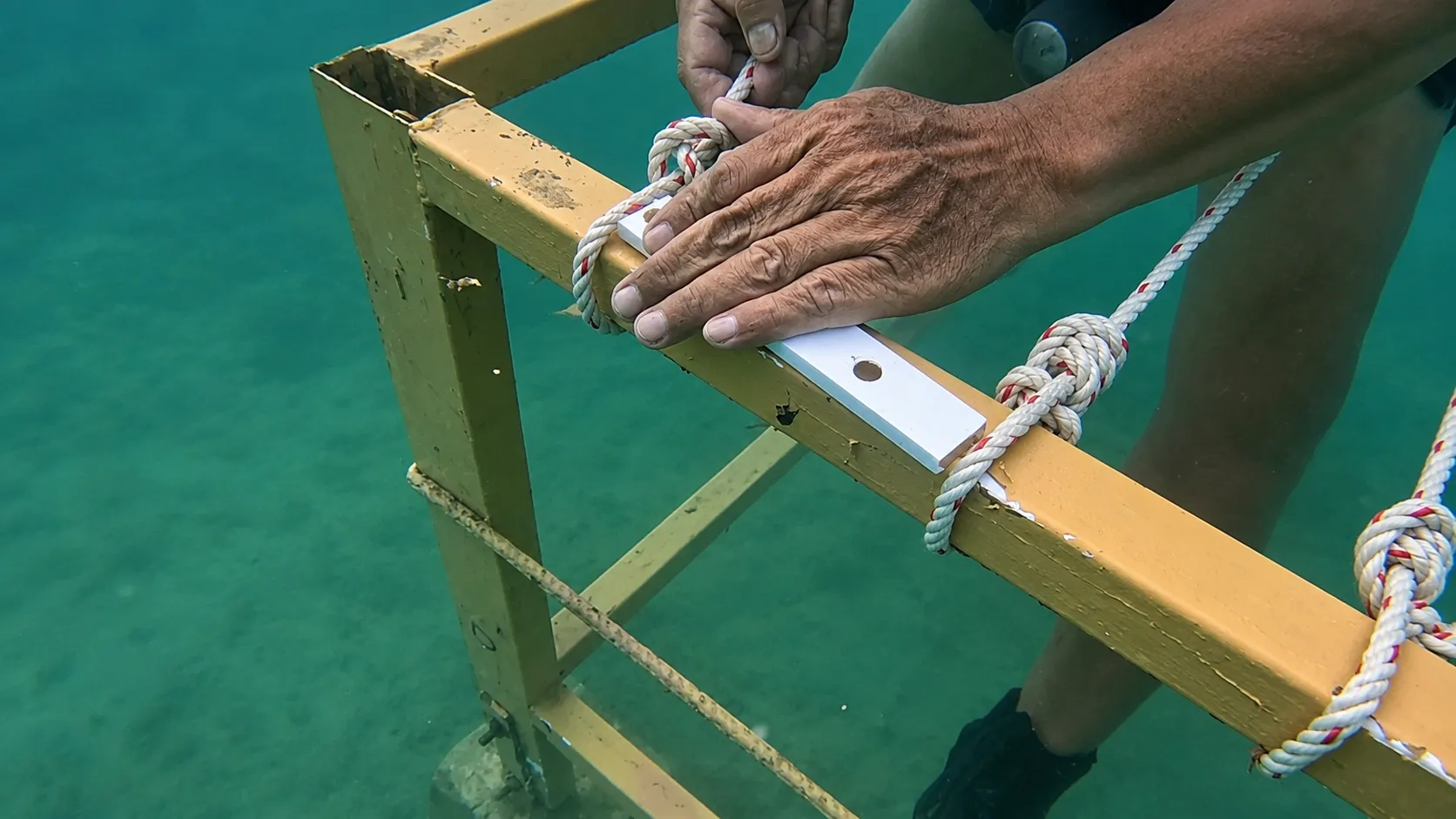
Coral fragments are suspended on horizontal ropes at mid-water depth — optimising sunlight, current flow, and growth while protecting them from sand and sediment.
Coral Transplantation
Nursery-grown fragments are transplanted onto degraded reef sections using non-toxic epoxy, then monitored monthly for survival rate, growth, and reef integration.
Community Workshops
Regular sessions for fishers, resort staff, and dive guides cover reef ecology, responsible snorkelling practices, and how the community can actively protect restoration work.
Mooring Buoys
Purpose-built mooring buoys at high-use dive and snorkel sites eliminate anchor damage to coral — one of the most immediate and preventable threats to the reef.
Long-Term Monitoring
A regular scientific monitoring protocol tracks coral survival, species diversity, and reef cover over time — feeding data directly into adaptive management decisions.
Long-Term Vision
Built to Last Beyond Our Involvement
Sustainability is at the core of everything we design. Rather than a short-term intervention, we are building a self-sustaining community-led model that outlasts any single organisation's involvement.
- Training 10–20 local dive guides and fishers in reef monitoring and nursery maintenance
- Formalised partnerships with beach resorts and dive operators
- Eco-diving programme generating recurring revenue from paying volunteers
- Annual public reports shared with community, partners, and government
- Replicable model designed to expand to other Myanmar coastlines
Programme Milestones
Phase 1 — Baseline Survey
Underwater reef mapping, species documentation, and priority restoration zone identification across Ngwe Saung reefs.
Phase 2 — Nursery Deployment
Rope nursery installation, donor coral fragmentation, and first grow-out cycle with bi-weekly monitoring.
Phase 3 — Transplantation
Outplanting nursery-grown fragments onto degraded reef substrate with monthly survival monitoring.
Phase 4 — Community Expansion
Local volunteer training programme, eco-dive launch, mooring buoy installation, and stakeholder partnerships formalised.
Get Involved
Every Coral Fragment Matters
Your support funds rope materials, dive equipment, community workshops, and the scientific monitoring that measures our impact. Without intervention, damage becomes irreversible within years.